
WORKSHOP: Climate Change, Climate Action, and Climate Justice in Southeast Asia: Insights
/
Introduction
As climate change intensifies across Southeast Asia, its impacts are increasingly experienced through the intersection of environmental transformations and deepening social inequalities. In Thailand, shifting weather patterns, recurrent floods and droughts, and uneven access to resources continue to shape the distribution of risks and vulnerabilities across society. While recent policy developments—such as the Climate Change Act—signal a growing institutional response, critical questions remain regarding whose lives are protected, how adaptation is practised, and what constitutes climate justice in an increasingly uncertain future.
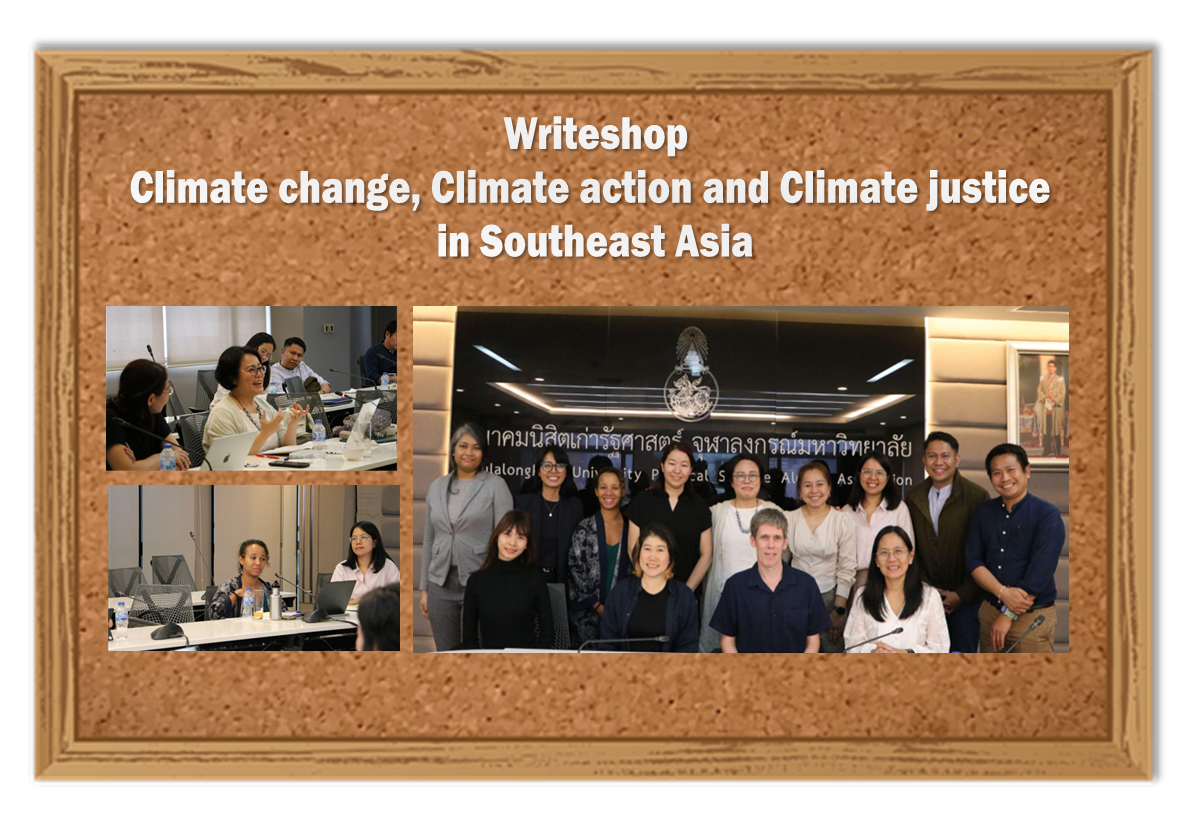
Facilitated by Prof. Soyeun Kim, Assoc. Prof. Takayo Ogisu, Dr. Kelly Dorkenoo, and Assoc. Prof. Dr. Carl Middleton, the WriteShop, created a space for critical dialogue on how climate change is understood, lived, and contested across diverse contexts. Rather than treating climate change as a singular or purely technical problem, the discussions highlighted the plurality of experiences and perspectives that shape climate action and justice in the region.
Session 1: Rethinking Adaptation, Gender, and Lived Realities of Climate Crisis
The first session foregrounded how climate change is experienced not as an abstract global issue, but as a lived condition shaped by inequality, gender, and conflict.
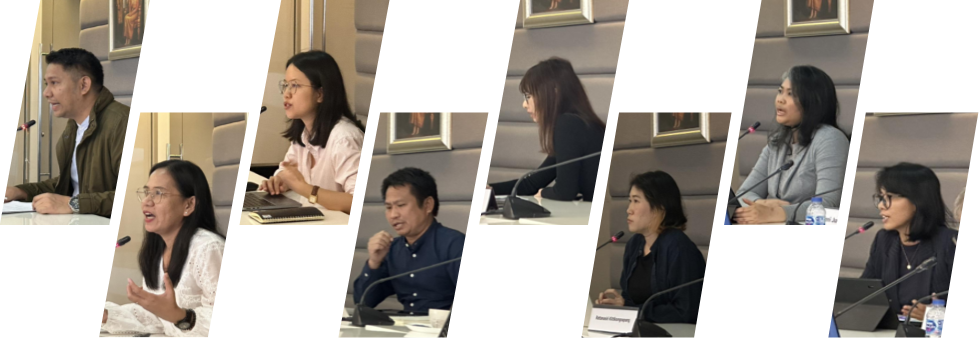
Assoc. Prof. Randy Ian Gallego advanced a critical intervention by questioning a common assumption in climate governance: that awareness naturally leads to preparedness. Drawing on his concept of disaster-threat passivity, he argued that in disaster-prone communities, inaction should not be understood as ignorance or failure, but as a socially learned and contextually rational response. He conceptualised crisis as a condition in which repeated exposure to environmental hazards normalises risk and reshapes how people understand and respond to it.
Gallego identified key dynamics underpinning this condition, including the normalisation of risk, reactive temporalities—where long-term planning is displaced by immediate response—and structural constraints such as poverty and weak institutional support. These are further mediated through cultural and social factors, including religion and community networks. From this perspective, “passivity” emerges not as disengagement, but as a form of adaptation under conditions of constraint. He concluded by calling for a rethinking of climate adaptation frameworks, arguing that they must be grounded in how people actually live with risk, rather than in idealised expectations of proactive resilience.
Caroline D. Piñon shifted the discussion toward a gendered and spatial analysis of climate adaptation among smallholder farmers in the Manupali watershed in the Philippines. Her study emphasised that vulnerability and adaptive strategies are not only gendered but also shaped by location within ecological systems, particularly along upstream–downstream gradients.
She argued that while both men and women engage in adaptation, their perceptions and strategies differ significantly. Women farmers, often more directly engaged in everyday environmental management, articulated detailed accounts of climate exposure over time, while men demonstrated stronger recollections of major disaster events. At the same time, adaptive responses varied across locations: upstream and downstream communities identified different vulnerabilities and priorities. While both groups supported interventions such as agroforestry and landscape restoration, men tended to emphasise collective, long-term strategies, whereas women’s perspectives reflected situated, experience-based knowledge of environmental change. The study ultimately highlighted the need for context-specific and gender-sensitive adaptation policies that recognise both spatial and social differentiation.
Ei Ei Lin brought attention to the intersection of climate change, conflict, and gender through her study of displaced women in the Tanintharyi Region of Myanmar. Framed through feminist political ecology and sustainable livelihoods approaches, her work emphasised how environmental degradation and armed conflict intensify existing inequalities while simultaneously reshaping gender roles.
She argued that displaced women are not merely victims of crisis but are central actors in sustaining both livelihoods and ecosystems, even under conditions of extreme precarity. Following the 2021 coup, many communities became increasingly dependent on natural resources, often through informal or precarious means, as men migrated due to conscription pressures. In this context, women adopted new livelihood strategies, including foraging and small-scale environmental resource management, reflecting both necessity and adaptability.
Importantly, Ei Ei Lin highlighted the emergence of women’s agency in governance and community organisation, as women collaborate with local civil society actors, contribute ecological knowledge, and participate in decision-making processes. However, she underscored that these contributions remain underrecognized, even as women disproportionately bear the burdens of environmental degradation. Her analysis ultimately positioned displaced women at the centre of climate justice debates, demonstrating how adaptation, survival, and inequality are deeply intertwined in conflict-affected contexts.
Session 2: Displacement, Livelihoods, and the Politics of Climate Governance
The second session turned attention to how climate change reshapes livelihoods and governance, highlighting the ways policy frameworks, economic priorities, and infrastructure interventions redistribute risks and vulnerabilities across communities.
Jarukit Kanokjaros examined the relationship between climate change and internal displacement in Thailand’s farming communities, arguing that existing policy frameworks remain insufficient to address this growing challenge. Based on a review of government reports, policy documents, and scholarly literature, the study identified a critical gap: Thailand lacks a coherent framework for climate-induced displacement.
Jarukit reframed displacement not simply as a direct outcome of environmental hazards, but as a governance-mediated process, where institutional responses play a decisive role in shaping who moves, how, and under what conditions. He highlighted a key paradox in current policy approaches: while state responses emphasise infrastructure, recovery, and “build-back-better” strategies, they often fail to address underlying structural vulnerabilities. In this context, migration and evacuation emerge as forms of “adaptation,” albeit ones that remain largely unrecognised in policy discourse. Drawing on cases such as the 1988 Kathun landslide and the 2004 tsunami in Nam Khem village, he demonstrated that displacement is multi-causal, shaped by the interaction of environmental stress, socioeconomic precarity, and institutional decisions. He concluded by calling for a new, integrated policy approach that recognises displacement as central to climate adaptation and prioritises long-term, inclusive solutions for vulnerable farming communities.
Etik Sulistiowati Ningsih shifted the focus to Indonesia, offering a critical perspective on climate governance and sectoral invisibility. Her central argument was that dominant climate action frameworks, particularly those centred on carbon markets, forestry offsets, and technocratic mitigation, systematically marginalise inland fisheries and the communities that depend on them.
She argued that this reflects a broader “Plantationocene” logic, where climate policies privilege land-based carbon economies while rendering aquatic livelihoods politically peripheral. As a result, fisheries-dependent Indigenous Peoples and Local Communities (IPLCs), such as the Kutai in East Kalimantan, are excluded from decision-making processes and resource allocation, even as they bear the brunt of climate impacts. Importantly, Etik emphasised that these communities already possess locally embedded adaptive strategies, including seasonal mobility, diversified livelihoods, and climate-responsive practices. However, these forms of knowledge and adaptation remain undervalued within state-led frameworks. Her analysis ultimately called for a repositioning of inland fisheries at the centre of climate action, advocating for governance models that move beyond carbon-centric paradigms toward livelihood-centred and justice-oriented approaches.
Kamol Homklin grounded the discussion in the Thai context through a case study of the Ubon Ratchathani Bypass Canal Project, critically examining the politics of large-scale infrastructure in responding to climate-induced flooding. While flooding in the region has intensified in recent years due to climate change and shifting environmental conditions, Kamol argued that the state’s response, particularly the construction of a massive diversion canal, reveals deeper issues of unequal risk distribution.
From an engineering perspective, the project is designed to protect urban economic zones by redirecting excess water. However, Kamol highlighted that this solution effectively transfers flood risks to rural communities, requiring land expropriation, displacement, and exposure to new environmental hazards. In this sense, infrastructure does not simply mitigate climate risks but actively reallocates them along lines of power and geography. He argued that flooding should not be understood solely as a natural phenomenon, but as a politically mediated outcome, shaped by decisions over whose lives, livelihoods, and spaces are prioritised. The case ultimately raises critical questions about justice, voice, and participation in climate adaptation, particularly for rural populations who bear the costs of protecting urban centres.
Session 3: Technology, Knowledge, and Contesting Climate Futures
The third session expanded the discussion into emerging domains of climate governance, highlighting how technological development, media dynamics, and competing knowledge systems shape responses to climate change.
Phan Vo Minh Nhan, Le Ngo Huyen Trang, Vo Duong Anh Phuong, and Nguyen Thi Khanh Ly examined the environmental implications of data centre expansion in Thailand, raising critical concerns about the hidden ecological costs of digital transformation. While Thailand positions itself as a regional data hub, the presenters argued that the rapid growth of data centres brings significant environmental trade-offs that remain insufficiently studied and regulated.
They highlighted that data centres contribute to increased greenhouse gas emissions, driven by rising electricity demand and continued reliance on non-renewable energy sources. Beyond energy consumption, the study highlighted multiple environmental pressures, including intensive water use, challenges in wastewater management, e-waste generation, and noise pollution. In particular, the growing demand for water in a context where many Thai provinces already face water scarcity underscores a critical sustainability concern.
The presenters emphasised that current policy frameworks have yet to fully integrate environmental and climate justice considerations. They called for a more comprehensive approach, including improved efficiency standards, investment in alternative cooling technologies, strategic site selection, and stronger coordination between state, private sector, and communities. Ultimately, the study argued for balancing digital economic ambitions with environmental sustainability and social protection, positioning data centres as an emerging site of climate governance.
S Seng Mai shifted the focus to the psychological and behavioural dimensions of climate change, particularly among university students exposed to climate-related disasters through the media. Drawing on the Transactional Model of Stress and Coping, the study explored whether climate change anxiety mediates the relationship between media exposure and pro-environmental behaviour.
The findings challenged a common assumption that emotional responses are the primary drivers of action. While media exposure was found to significantly increase both climate change anxiety and adaptive behaviours, anxiety itself did not play a decisive mediating role. Instead, the study highlighted media trust as a key factor influencing whether individuals translate awareness into action. In this sense, students appeared to engage more in problem-focused coping strategies, responding directly to information rather than being driven primarily by emotional distress.
The study highlighted an important insight: it is not the intensity of anxiety, but the credibility of information that shapes behavioural responses. This points to a critical gap in current discussions, suggesting that effective climate communication depends not only on raising awareness but also on building trust in information sources.
Rattanasiri Kittikongnapang offered a conceptual and ethnographic critique of carbon forestry and dominant climate mitigation frameworks, drawing on the experiences of Pga K’nyau communities in Northern Thailand. Central to her argument was the tension between different ontologies and ways of knowing, captured through the metaphor of the “circle and the square.”
She argued that carbon credit systems—grounded in technocratic and market-based logics—often fail to align with indigenous worldviews that understand forests as part of a relational and more-than-human system, rather than as quantifiable carbon stocks. This disconnect raises fundamental questions about what is being valued and commodified in climate mitigation efforts. As communities engage with carbon forestry schemes, they are compelled to navigate and translate between these differing frameworks, often without full access to information or meaningful participation in decision-making processes.
Foregrounding the concept of pluriversality, the study emphasised the coexistence of multiple epistemologies and called for more inclusive and equitable approaches to climate governance. Rather than treating indigenous knowledge as an alternative, Rattanasiri argued that it should be recognised as a central and legitimate basis for climate solutions. Her analysis challenged dominant “one-size-fits-all” approaches, advocating for decision-making processes that respect diverse ontologies and prioritise the rights and voices of local communities.
Session 4: Relational Ontologies and Community-Centred Climate Action
The final session brought the discussion into deeper engagement with relational ontologies, indigenous knowledge systems, and community-based climate action, challenging dominant technocratic approaches to climate governance.
SHAO Meng examined climate adaptation among Indigenous Karen communities in Northern Thailand through the lens of relational ontology and forest politics, arguing that climate change cannot be understood solely as a physical or environmental phenomenon. Instead, it emerges through the interaction of lifeworlds, historical processes of state-making, and ongoing political-economic transformations.
Her central argument emphasised that Karen adaptive practices are not reactive responses to external shocks, but an ongoing praxis of living with uncertainty, grounded in ecological knowledge, ritual relations with forests and water, and systems of mutual support. However, these relational worlds are increasingly shaped—and constrained—by state policies, market forces, and development interventions. In particular, the expansion of carbon offset schemes risks imposing external frameworks that may enact forms of ontological violence by forcing local ways of knowing into standardised, technical categories.
SHAO Meng highlighted how Karen communities engage in what she terms “configurative politics”—a process of translating their knowledge into forms legible to external actors, while navigating asymmetries of power. Yet, this translation is not neutral; it often entails loss. She thus raised a critical tension within climate justice discourse: recognition of indigenous knowledge can itself become a form of violence if it requires translation that undermines ontological integrity. The study ultimately called for a shift away from extractive forms of recognition toward approaches that support community autonomy and address the structural conditions shaping their adaptive practices.
Maya Dania extended the discussion of relational ontologies through her study of rural women along the Mekong River in Chiang Khong, introducing the concept of “Mekong Mitr” to describe the relational partnership between humans, the river, and its multispecies life. Her analysis emphasised that climate change is experienced not merely as environmental variation, but as the disruption of a multispecies relational world.
Focusing on women engaged in Kai (river algae) harvesting, she showed how ecological knowledge is embedded in everyday practices of reading the river—through attention to water clarity, currents, sediment, and seasonal rhythms. These practices sustain livelihoods while reinforcing relationships between humans and the river. However, climate variability and hydropower regulation have increasingly destabilised these ecological patterns, leading to irregular algae cycles, declining fish populations, and unpredictable water levels.
Maya Dania captured this transformation through the phrase “the Mekong stops speaking,” reflecting the erosion of ecological signals that communities rely on. This disruption not only affects livelihoods but also produces emotional and cultural impacts, including solastalgia, as familiar environments become unrecognisable. Situating her analysis within debates on pluriversal worlds versus technocratic governance, she argued that dominant climate frameworks fail to account for these relational dimensions, effectively contributing to what can be understood as the destruction of entire lifeworlds.
Reni Juwitasari further emphasised the importance of gendered ecological knowledge through her study of Hmong communities in Northern Thailand, where climate change is primarily interpreted through changes in water systems. She argued that for Hmong women, shifts in rainfall patterns, stream flows, and drought conditions are not isolated phenomena, but indicators of broader transformations in forest ecosystems, biodiversity, and health.
Her findings highlighted how women play a central role in interpreting environmental change and organising collective responses through community forest governance. Practices such as rotational land use and diversified cropping systems sustain both ecological resilience and community livelihoods. At the same time, women’s observations—such as the decline of medicinal plants and reduced forest diversity—point to the tangible impacts of environmental change on everyday life.
Reni Juwitasari also underscored the tension between these locally grounded practices and state-led development approaches, particularly the promotion of monoculture plantations, which undermine ecological diversity and existing governance systems. In this context, she positioned women not as passive victims but as active agents of climate adaptation, whose knowledge and practices are central to sustaining both communities and ecosystems. Her study ultimately called for greater recognition of these community-based and pluriversal approaches in shaping more inclusive and context-sensitive climate policies in Thailand.
Across the four sessions, the workshop underscored that climate change in Southeast Asia is not only an environmental crisis but a deeply social and political one. The presentations collectively highlighted the need to move beyond technocratic solutions toward approaches that centre lived experiences, address structural inequalities, and recognise diverse ways of knowing. In doing so, the WriteShop reaffirmed that achieving climate justice requires not only policy innovation but also a fundamental rethinking of how climate change is understood and acted upon.