

Across Southeast Asia, the vast majority of governments have promised to protect and promote Human Rights through various means, but in practice ensuring human rights has proven more challenging. Adopting a Human Rights and Human Security approach to development means ensuring the inherent dignity and equality of all people, and protecting civil and political freedoms. Civil society, together with independent state organizations, such as national human rights institutions, play a crucial role in protecting and promoting human rights and ensuring access to justice and redress. In some cases, human rights defenders may be at risk of being targeted for their work. In a rapidly integrating region, where cross-border trade and investment does not necessarily equate with cross-border responsibility access to justice, the extra-territorial obligations of states has recently emerged as a new focus. In Southeast Asia, new means are needed to ensure that governments and businesses protect and respect human rights and human security, to which this research theme contributes.
Ongoing Research
Past Research


Publications




Most studies of major disasters focus on the impacts of the event and the short-term responses. Some evaluate the underlying causes of vulnerability, but few follow-up events years later to evaluate the consequences of early framings of the recovery process. The objective of this study was to improve understanding of the influence that recovery narratives have had on how decisions and actions are undertaken to recover from a disaster, and what influence this has had in turn, on long-term resilience. The study drew on comparisons and insights from four case studies in Southeast Asia: (1) local innovations that led to new policies for living with floods in the Mekong Delta in Vietnam following the 2001 Mekong River floods; (2) livelihood and infrastructure responses in Prey Veng, Cambodia, after the 2001 and 2011 Mekong River floods; (3) the role of the Panglima Laot, a traditional fisheries management institution, in the recovery process following the 2004 Indian Ocean tsunami in Aceh province, Indonesia; and (4) the challenges faced by small and medium enterprises in a market area following the 2011 floods in Bangkok, Thailand. This study identified alternative narratives on the purpose and means of ‘recovery’ with implications for who ultimately benefits and who remains at risk. The study also found both formal and informal loss and damage systems were involved in recoveries. The findings of this study are important for improving the performance of loss and damage systems, both existing and planned, and, ultimately, supporting more climate resilient development that is inclusive.

This chapter shows how small-scale farmers and fishers around Tonle Sap Lake have been relatively resilient to flooding. However, changing flooding regimes have created more regular shocks for farmers, whilst declining fish stocks are increasing fishing households vulnerability. These flooding-related shocks and associated vulnerabilities link to the creation of debt for farmers and fishers, which influences the decision to send household members to migrate. Whether the incentive for migration is livelihood diversification or debt repayment, the influence of the Tonle Sap’s flood regime from year to year is significant as it is generative of the viability of farming and fishing livelihoods. Household livelihood viability and associated vulnerabilities, however, is in turn determined by social factors, such as the politics and contestations over access to resources in the village, as well as national level policies on fisheries and farming and transboundary water governance.


Flooding is a common experience in monsoonal regions of Southeast Asia, where diverse flood regimes have for centuries shaped agrarian and fisheries-based livelihoods. However, in recent public discourse, the link between flooding and migration is most often made with regard to catastrophic flood events. News images of frequent and intense weather-related flood events in the region’s low-lying megacity and delta regions in recent years has contributed to a perceived link between extreme environmental events and mass migration through displacement. Yet, this focus on mass displacement frames migration in largely negative terms. Mobility is seen as a failure of adaptation to a changing environment, with both trans-border and internal population mobility to some even regarded as a security issue.

Flooding is a common experience in monsoonal regions of South East Asia, where diverse flood regimes have for centuries shaped agrarian and fisheries-based livelihoods. In this book, we highlight the need for a nuanced understanding of the connections between flooding and migration in Southeast Asia. The book provides key insights from eight empirical case studies in urban and rural areas across Southeast Asia. Overall, through a better understanding of the relationship between migration, vulnerability, resilience and social justice in Southeast Asia, we aim to sensitize flood hazard policy agendas to the complexities of migration and mobility.

Flooding is a common experience in monsoonal regions of South East Asia, where diverse flood regimes have for centuries shaped agrarian and fisheries-based livelihoods. In this policy brief, we respond to the need for a nuanced understanding of the connections between flooding and migration in Southeast Asia. The policy brief summarizes key insights from a research project with eight empirical case studies in urban and rural areas across Southeast Asia. The policy brief outlines the multi-dimensional relationship between migration, vulnerability, resilience and social justice in Southeast Asia, cutting across the local, national and regional level, and offers recommendations on how to sensitize flood hazard policy agendas to the complexities of migration and mobility.


JOURNAL ARTICLE: Gendered eviction, protest and recovery: a feminist political ecology engagement with land grabbing in rural Cambodia

By Dr. Danny Marks
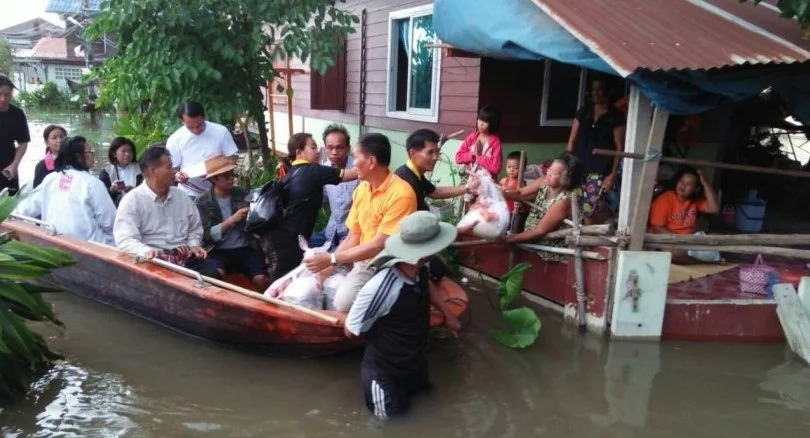
The 2011 flood was the worst in Thailand in decades. Many of the impacts occurred in the Bangkok Metropolitan Region. The floods negatively affected small and medium enterprises (SMEs).

By Dr. Carl Middleton and Zaw Aung
The focus of this chapter is a water storage dam proposed at Ka Lone Htar village, located outside of the Dawei SEZ itself, intended to supply freshwater to the SEZ’s industries. If built, the dam would fully submerge the village consisting of 182 households, along with several thousand acres of plantations and natural forest. In response to the threat of dispossession and relocation, the Ka Lone Htar community members successfully mobilized and resisted the dam.

By Carl Middleton and Ashley Pritchard
In Southeast Asia, major transboundary rivers such as the Mekong River are central to the food security, livelihoods and culture of millions of people. An increasingly extensive program of large hydropower dam construction is underway in Laos, Cambodia and Myanmar to meet domestic electricity demand and for power export to neighboring Thailand, Vietnam and China.

By Carl Middleton
This paper examines how processes of transboundary river resource dispossession by large hydropower dams have been challenged within “arenas of water justice” in Southeast Asia, conceptualized as politicized spaces of water governance in which a process for claiming and/or defending the Right to Water takes place.

By Carl Middleton (International Researcher, CSDS), Jeremy Allouche, Dipak Gyawali and Sarah Allen.
This article maps the rise of the water-energy-food 'nexus' as a research, policy and project agenda in mainland Southeast Asia. We argue that introducing the concept of environmental justice into the nexus, especially where narratives, trade-offs and outcomes are contested, could make better use of how the nexus is framed, understood and acted upon.

Edited by Yongyuth Chalamwong, Naruemon Thabchumpon, and Supang Chantavanich
Need excerpt
Activities and Events




Research Blogs


What are the existing conditions of ethnic rural women in two villages in the downstream area of the proposed Mong Ton Dam project in relation to men in their day-to-day life? How do women control and get access to resources at home, in the community and the country? What would be the implications for them if the large-scale dam is built?

By Zhong Mei, MK31 Fellow
Faced with a large and ever-expanding population, China’s employment issue has been a growing concern for the country and its people. With a plethora of ethnic minorities, Yunnan province has been strongly impacted in terms of employment due to the growing population, economy, and new policies. In addition, disparities between men and women have prominently widened amidst overall unemployment concerns. My research focuses on Liuku Town, Nujiang Lisu Autonomous Prefecture of Yunnan Province, and aims to uncover and analyze employment differences between men and women in a resettlement area village called Xiao Shaba that has been built for the planned Liuku hydropower project.

By Dr. Cherry Aung, MK31 Fellow
As one of the longest trans-boundary rivers and the only major one that still flows freely without dams in Southeast Asia, the Thanlwin river supports the livelihoods of approximately 10 million people. The river hosts rich fisheries and supports fertile farmland vital to the food security of many ethnic minority communities living along the river banks and beyond. Yet, like most rivers in the world, it is facing multiple pressures from both natural and human causes along its length, which could affect the ecosystem and the livelihoods of thousands of local people who depend upon them

By Carl Middleton
n Asia and globally, the water-energy-food nexus has received growing attention from policy makers, researchers, and practitioners. A key premise of ‘the nexus’ is that water use is interdependent with energy and food production. Thus, from a nexus viewpoint, the relationship between water, energy and food should be understood, and if demand increases in one then trade-offs must be managed with the others.