

WORKSHOP: Rivers, Development, and Impact Assessment: Experience, Practice, and Future Prospects in the Mekong Basin, Vientiane, Laos (26 Jan 2026).
/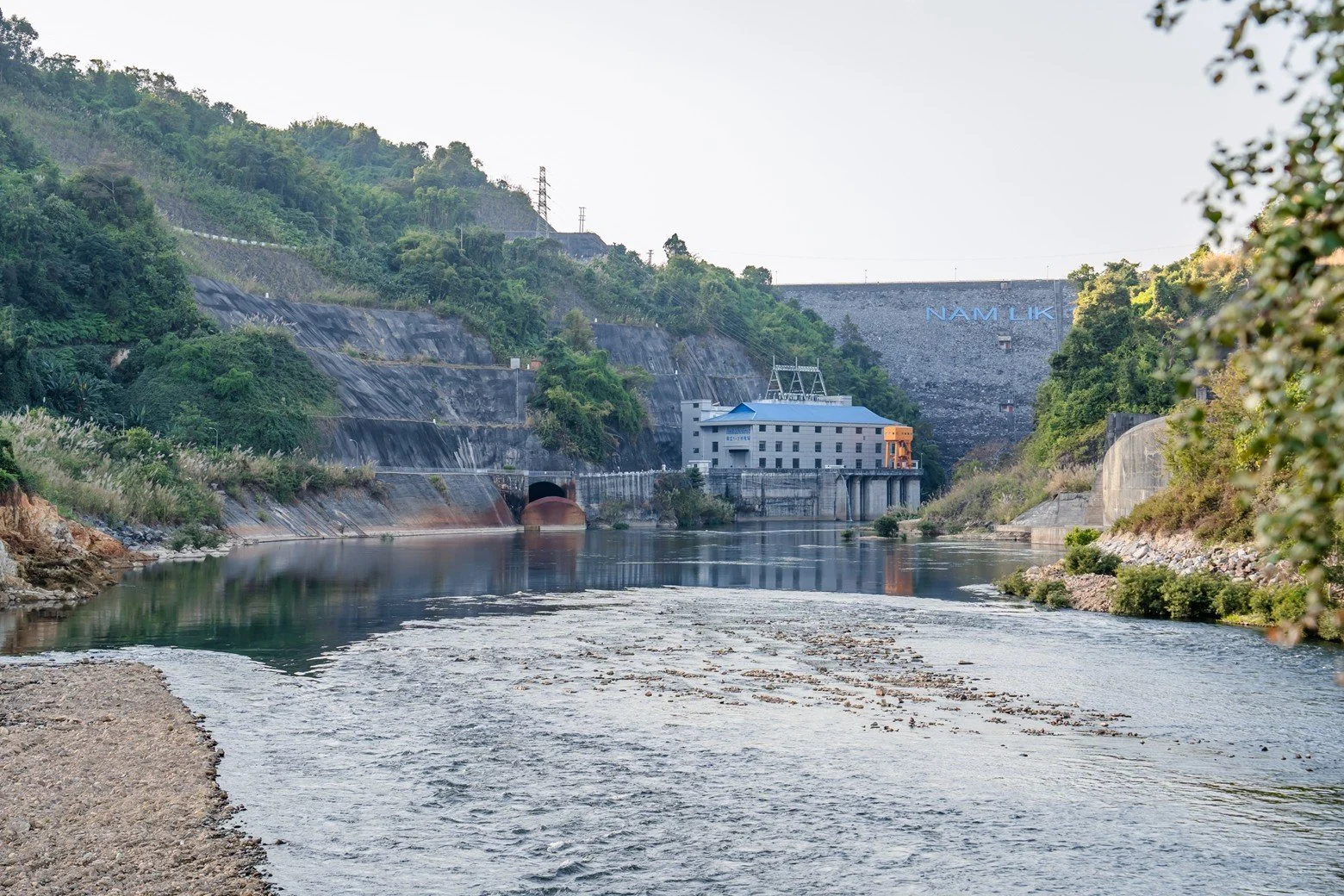
Nam Lik 1-2 dam (Credit: author)
In a region where hydropower development has often impacted communities' river-dependent livelihoods, how can impact assessment policy and practice be improved to integrate local knowledge, Gender Equality, Disability, and Social Inclusion (GEDSI), and comprehensive ecological evidence to transition from just aiming for project compliance toward a truly equitable and green transformation?
On 26 January 2026, a workshop on “Rivers, Development and Impact Assessment: Experience, Practice and Future Prospects in the Mekong Basin” was organized in Vientiane, Laos, to reflect on how impact assessment is understood, practiced, and contested across different scales. The workshop brought together government agencies, researchers, environmental consultants, private sectors, civil society organizations, and development partners to reflect on how impact assessment policies and practices have changed over time and what issues remain unresolved. Building on fieldwork in villages affected by development projects, the workshop created a space to connect policy debates with lived experiences.
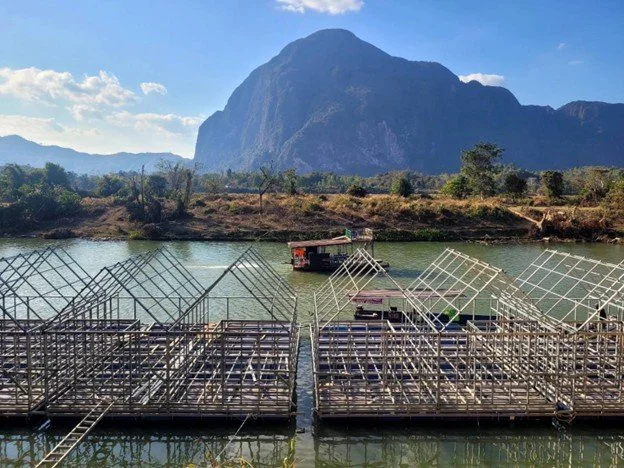
Floating Bungalows on the Nam Lik River Feuang District, Laos (Credit: author)
The workshop kicked off with one of the core objectives: to examine how impact assessment laws and policies, including environmental and post-impact assessment, have changed in Laos and why these changes are important. Speakers noted that the goal of impact assessments has shifted from simply meeting requirements to ensuring long-term social and environmental responsibility. While consultants discussed day-to-day assessments, government officials focused on the challenges of monitoring and enforcement. It became clear that there are multiple actors and interests influencing the design and implementation of the impact assessment, and each shapes its own way.
A second part of the workshop was discussed on livelihood, ecosystems and gender equality, disability, and social inclusion (GEDSI) in impact assessments. This theme found an important connection with observations from the fieldwork. Impact assessments often fail to track social changes, such as effects on income, gender, and local livelihoods. During the post-impact phase, communities are left to deal with long-term effects with limited support. Participants in the workshop emphasized that local knowledge is often recognized in theory but not incorporated in practice.
The speakers highlighted that the traditional EIA framework rarely integrates GEDSI principles into impact assessments, and it should be added as a basic requirement in policy and government practices, not an optional add-on. Moreover, the speakers discussed how local ecological knowledge was often devalued in IA, including situated knowledge on changes in water flow affecting fisheries, farming, and daily livelihoods, as well as changing of community dynamics.
The workshop also looked at how impact assessment works when implementing it. Some speakers noted that Laos has made progress in strengthening legal and institutional frameworks for impact assessment. Now, for example, there are clear procedures for how developers plan projects. However, practical challenges in implementing assessment were also noted, including limited budgets, tight timelines, and competition in the market, which creates pressure to finalize impact assessments and weakens its implementation and post-assessment follow-up. It was also observed that the scale of a project affects how well it's managed. Small projects at the provincial level, for example, can struggle with technical capacity, sometimes leading to construction being completed before assessments are finalized. The quality of impact assessment is largely determined by developer commitment rather than just for requirements.
Looking ahead, participants discussed future prospects for impact assessment that emphasized building a stronger post-impact framework that can facilitate green transformation without social and environmental harm. The participants asked if impact assessments should continue as a procedural requirement that is emphasized primarily at the pre-approval stage, or changed into a more holistic and long-term governance tool that has continuity through the whole project cycle.
Both fieldwork and workshop discussions highlighted that impact assessment in the Mekong Region, including in Laos, is more than just a technical exercise. It is deeply shaped by development visions, power relations and regional energy demands. Villagers’ experiences of environmental and social change offer critical insights into long-term impacts that may not be immediately visible in formal assessments. By holding the workshop in a country at the center of Mekong hydropower development, it highlighted the urgency to rethink how impacts are governed and understood. If Laos continues to play a role as the “battery of Southeast Asia,” impact assessment should move towards processes with accountability, inclusion and long-term engagement with the people, as they are the center of the development.
The workshop marked an important step to reimagining impact assessment and bridging between policy and lived experience. It demonstrated the value of bringing diverse actors together to reflect on the challenges in impact assessment and provide insightful knowledge. Crucial insights highlighted the strengths, limits, and challenges of expert knowledge and the importance of foregrounding the voices of people most affected. While impact assessment frameworks in Lao PDR have advanced, significant gaps remain in addressing livelihood sustainability, ecosystem integrity, and GEDSI outcomes. Addressing these gaps requires stronger post-impact assessment, inclusive participation, and adaptive management to ensure development benefits are shared equitably and sustainably.

Workshop on “Rivers, Development, and Impact Assessment: Experience, Practice, and Future Prospects in the Mekong Basin," Vientiane, Laos. (Credit: author)