

There are many different ways to understand a region, and its interconnections. One dominant perspective is that of economic regionalization, often understood as negotiated between nation states to facilitate cross-border trade and investment for economic growth. Another closely related one is intergovernmental organizations, such as ASEAN. Civil society groups have proposed alternative regionalisms, focused for example, on people-to-people connections. These approaches emphasize ecological connections and cultural collaboration, whilst also aiming to hold accountable state-centric and economic driven regionalization agendas. Regional collaboration can be between state and non-state actors to address challenges collectively, for example sharing transboundary commons such as rivers or air. Ultimately, all regional collaborations occur on the ground in (multiple) specific places, and therefore the connections between the local and the regional need to be understood. Different visions for regionalization need to be unpacked, evaluated, and reimagined, which is the theme of “rethinking regionalization.”
Ongoing Research

Past Research


Publications



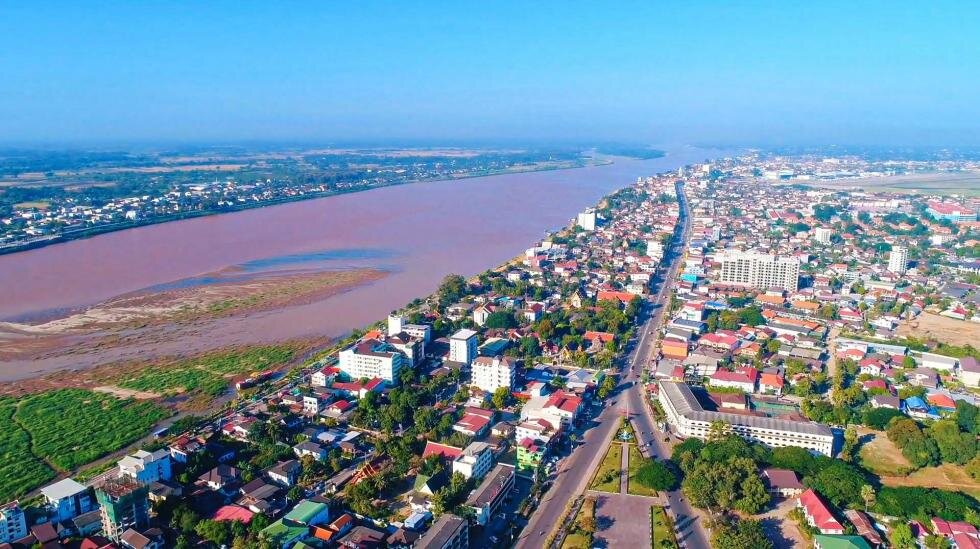




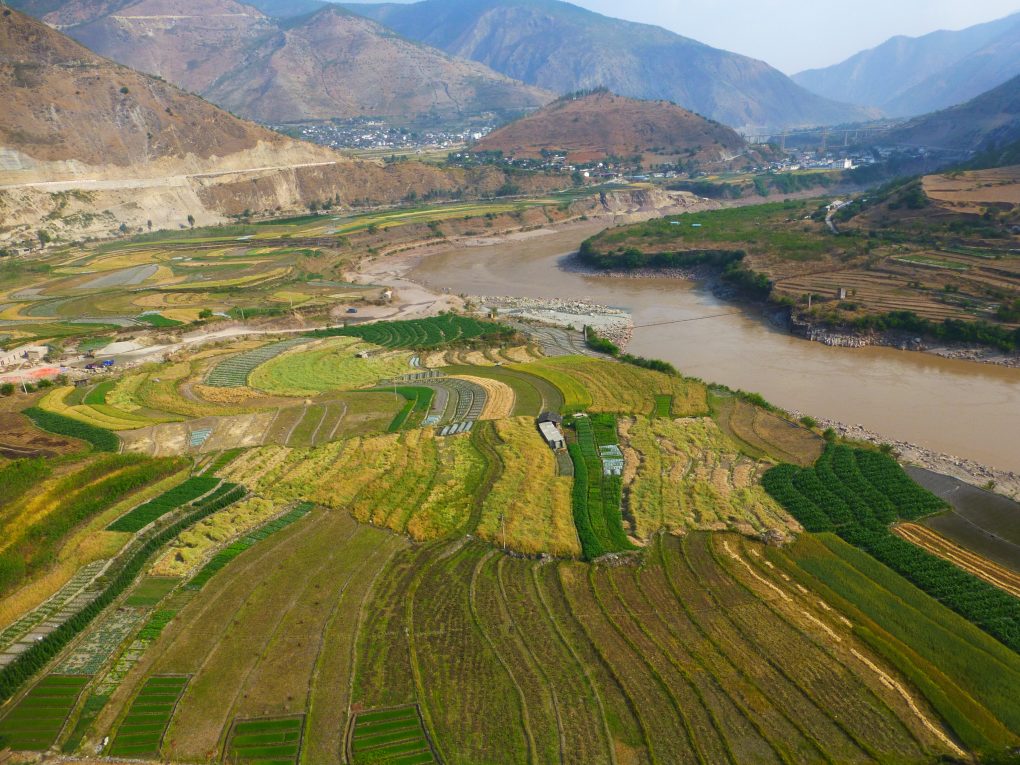
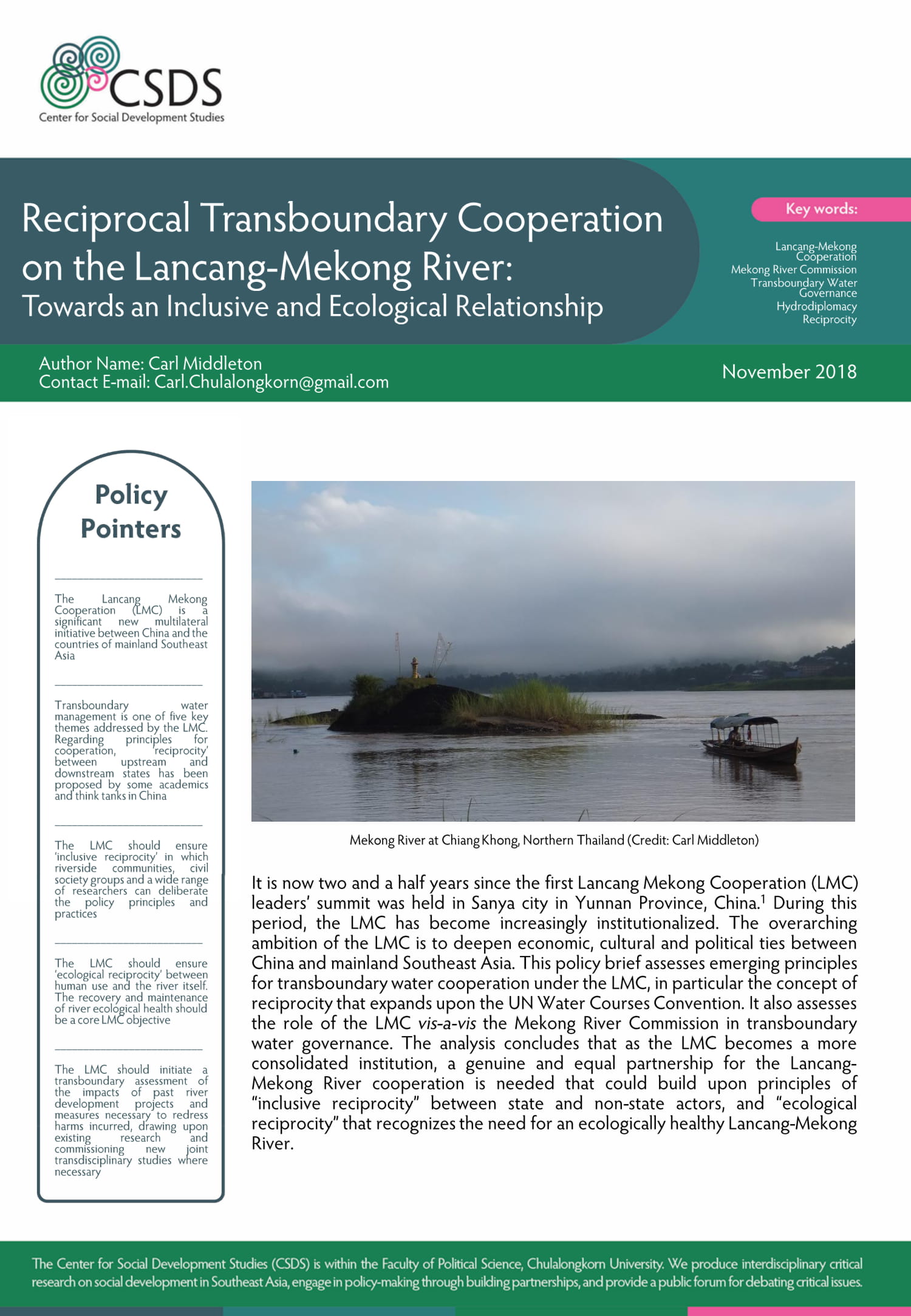


Water resources are inextricably linked to local livelihoods and wellbeing, agricultural production and food security, and local, national and the regional economies across the Mekong region. The Mekong, Red and Salween Rivers are all transboundary rivers that are subject to the dynamics of rapid change as the region increasingly integrates economically and socially. Whether development is inclusive, informed and accountable, and the rights and entitlements of marginalized communities recognized, remains a key challenge.

By Carl Middleton
This chapter examines the transition from state-led hydrocracies to increasingly liberalized modes of water resources development in mainland Southeast Asia, with a focus on large hydropower dams on transboundary rivers. Access to, use of and control over water is highly politicized, and an increasingly diverse assemblage of public, private and civil society actors are involved in water governance.

By Carl Middleton and Ashley Pritchard
In Southeast Asia, major transboundary rivers such as the Mekong River are central to the food security, livelihoods and culture of millions of people. An increasingly extensive program of large hydropower dam construction is underway in Laos, Cambodia and Myanmar to meet domestic electricity demand and for power export to neighboring Thailand, Vietnam and China.

By Dr. Carl Middleton and Dr. Jeremy Allouche
The countries sharing the Lancang-Mekong River are entering a new era of hydropolitics with a growing number of hydropower dams throughout the basin. Three ‘powersheds’, conceptualised as physical, institutional and political constructs that connect dams to major power markets in China, Thailand and Vietnam, are transforming the nature-society relations of the watershed.

By Liu Ning, Vira Somboon, Surichai Wun’gaeo, Carl Middleton, Charit Tingsabadh and Sangchan Limjirakan.
This article discusses how and why law enforcement operations can help countries to implement chemical and waste-related multilateral environmental agreements in a more efficient and effective way. The research explores key barriers and factors for organising law enforcement operations, and recommends methods to improve law enforcement operations to address illegal trade in hazardous waste and harmful chemicals.

By Carl Middleton
The arrival of the ASEAN Economic Community in December 2015 marked a major milestone in the ambition of the countries of the region to become closer to one another through economic cooperation. It anticipates economic growth, and with it a growing role for large transnational and domestic corporations, as well as for smaller businesses.

By Carl Middleton
This paper examines how processes of transboundary river resource dispossession by large hydropower dams have been challenged within “arenas of water justice” in Southeast Asia, conceptualized as politicized spaces of water governance in which a process for claiming and/or defending the Right to Water takes place.

By Carl Middleton and John Dore
In mainland Southeast Asia, plans for extensive hydropower development and regional power trade are increasingly underway with implications for transboundary water governance. This paper maps out the context, drivers, tools and arenas of water and electricity decision making, and examines the linkages and disjunctures between regional electricity and water governance frameworks.
Activities and Events


![EVENT [REPORT]: Policy Forum on Understanding the Lancang-Mekong Cooperation Framework and China's role in the Mekong region [Bangkok, 3 September 2018]](https://images.squarespace-cdn.com/content/v1/575fb39762cd94c2d69dc556/1536916392076-ZGG8Q64BZDZ2PYHJV37A/pics.jpg)




Research Blogs


The Greater Mekong Forum on Water Food and Energy provides a great chance for participants to exchange their knowledge and views on international rivers in the region. At the most recent Forum in Bangkok, in November 2016, my attention was caught by a presentation titled “From MRC (Mekong River Commission) to LMC (Lancang-Mekong Cooperation) towards a healthy economy and healthy river in Greater Mekong: the core transboundary compensative mechanism for water benefit-sharing.” During the forum, when Professor He Daming from Yunnan University proposed a transboundary compensation mechanism for water benefit-sharing after introducing the Chinese-initiated Lancang-Mekong Cooperation, launched in 2016, participants around my table first understood that after building eight dams on the upper Lancang-Mekong mainstream, China finally admitted those dams caused negative impacts to downstream states and would like to offer certain compensation under the LMC. However, when the presentation reached its end and a short discussion followed, several pairs of eyes widened when they found out that what was being proposed instead was that downstream states might get a bill under the transboundary compensation mechanism if they expected river flow augmentation from the upstream dams during times of drought, or that they had to offer to pay China if they asked for no more dams to be built on the upstream.
By Saw John Bright, MK31 Fellow
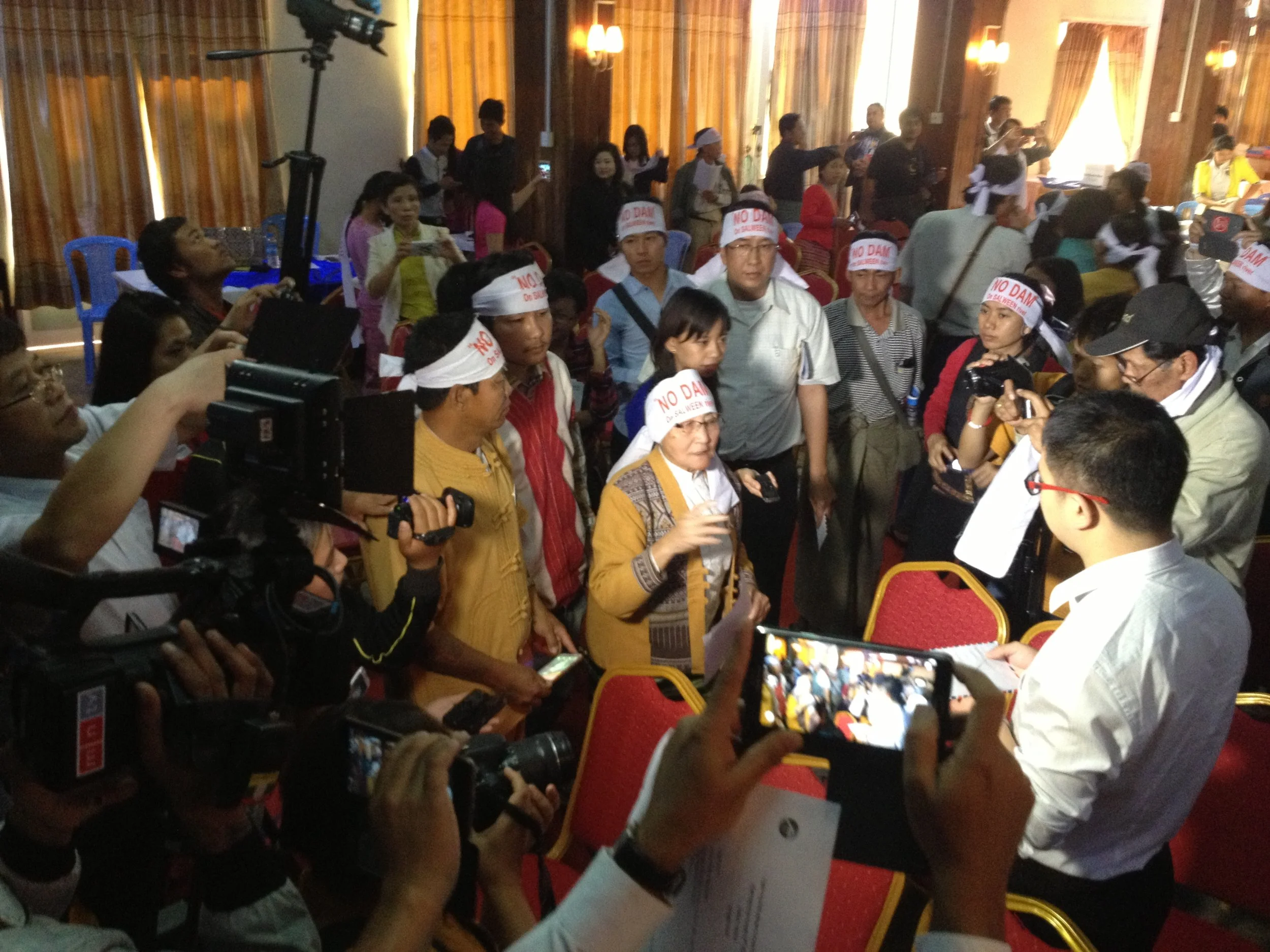
In late February 2013, the Burmese government announced six dam projects that were to be built on the Salween River in Shan, Kayah (Karenni) ,and Karen states. The investment and know-how would come from Chinese and Thai corporations in cooperation with three Burmese corporations. However, the proposed dams are located in active civil war zones, which will make their development and construction even more complicated.

By Hnin Wut Yee, MK31 Fellow
Wan Hsala is a secluded village along the Wan Hsala Stream housing a little over 30 households with a total population of approximately 100. As one of the small villages along the Salween River in the Eastern Shan state, the majority of its villagers are part of the Shan ethnic minority, while a few are ethnic Lisu and Bamar. Today, these villagers are facing actual and potential negative impacts from a hydropower construction project started about a decade ago. The local villager's limited knowledge of their rights and their lack of participation in the project have caused them to be taken advantage of. It is crucial that a solid framework of national and international standards reinforced with a strict enforcement vehicle is in place before any further project decisions are made.