

IN THE NEWS: "Don’t ‘Normalise’ Preventable Catastrophes and Disasters"
/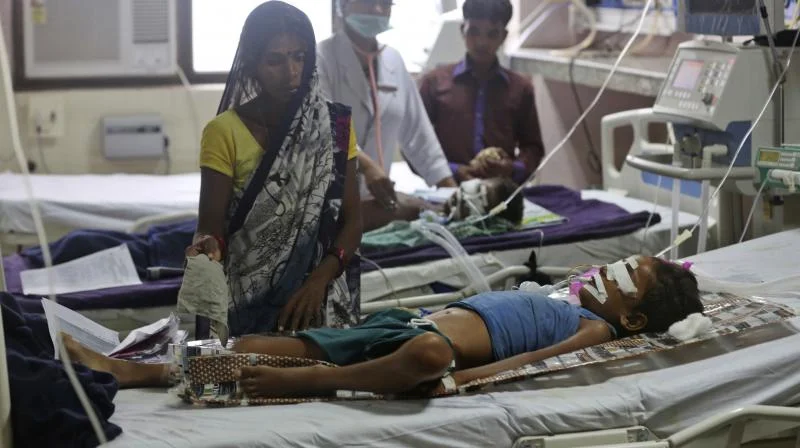
Climate change has made disasters much more severe and likely, and there is really no option but to take preventive measures...
Read MoreClimate change has made disasters much more severe and likely, and there is really no option but to take preventive measures...
Read MoreBy Keith Schneider [Circle of Blue, 2 August 2017]
In unfolding global energy revolution, expensive and ecologically risky dams may not be right choice to generate more electricity...
“The energy revolution is evolving around the world,” said Carl Middleton, an assistant professor of political science at Chulalongkorn University in Bangkok, and a scholar on Mekong River development. “This region is resisting the shift, though, because of the economics of building big new projects. But it seems inevitable that the shift will happen here. It raises questions about continuing to build so many big dams.”...
Read more at: http://www.circleofblue.org/2017/world/one-one-big-hydropower-dams-disrupt-mekong-rivers-free-flow/
By Panglong Video [Shan Herald Agency, 18 July 2017]
Video about the Salween local research exhibition at the Thai Studies conference in Chiang Mai, Thailand from 15 to 18 July 2017.
See the video at: https://www.facebook.com/PangLongOnlineVideo/videos/1180336375403816/
Session organized at the 13th International Conference on Thai Studies
"Globalized Thailand?" Connectivity, Conflict, and Conundrums of Thai Studies
15:15-16:45, 16th July 2017, Chiang Mai International Exhibition and Convention Center
Session convened by the Center for Social Development Studies, Faculty of Political Science, Chulalongkorn University
Thailand’s companies have become major investors in neighboring countries, including in agribusiness, hydropower, mining and various forms of industry. Thailand’s companies are backed by government policy, and typically financed by Thai commercial banks as well as, sometimes, Thailand’s Export Import Bank (Thai Exim). Thailand’s regional investment has furthermore been facilitated by various regional economic integration programs, including the Asian Development Bank’s Greater Mekong Subregion Program and more recently the ASEAN Economic Community. As one of the major economies of mainland Southeast Asia, Thailand has sought to positioned itself as central to economic regionalization. Given that Thailand itself is embedded within a wider global network of production, its companies’ investment in neighboring countries’ resource extraction and commodity production can also tied to a wider global political economy.
Whilst it seems that investment, commodities, goods and natural resources flow readily across borders, the same cannot be said of access to justice. In this panel, empirical case studies will be presented of Thailand’s cross-border investments that have in the process resulted in environmental and social harms, and in some cases violated human rights. The panel explores the various processes and arenas that have emerged as communities and civil society have sought redress and access to justice. These arenas have included in the national courts of the project host country, but also through various formal and informal cross-border processes that link to Thailand, including via Thailand’s National Human Rights Commission (TNHRC), and in one example a case ruled upon by Thailand’s administrative court. Meanwhile, a report of the TNHRC on the Dawei Special Economic Zone in Myanmar led to a Thai Ministry of Foreign Affairs recommendation in March 2016 that the government should set up a mechanism for the United Nations Guiding Principles on Business and Human Rights for Thai companies investing overseas. Thus, a wider array of international norms is also brought into play, reflecting the legal pluralism that nowadays governs cross-border investments. This also brings into focus a question of the extra-territorial obligations of Thailand with regard to the investment of Thai companies.
This panel will critically evaluate Thailand’s investment role in the region through the lens of transnational social and environmental justice. Through empirical case studies on agribusiness, hydropower and special economic zones, the political economy of these investments will be explored in order to understand the production of injustice and human rights violations. The papers will ask: what are the roles, opportunities and challenges for public interest law, national/ regional human rights institutions, other transnational soft law mechanisms, and civil society to protect and promote human rights on Thailand’s investments?
Discussant: Walden Bello.
Chair: Daniel King
Abstracts can be downloaded here (see page 7; session 53). Conference details are available here.

14:00-16:00, Alumni Meeting Room, 12th Floor, Faculty of Political Science, Chulalongkorn University
Co-organized by the Center for Social Development Studies (CSDS) and the Master of Arts in International Development Studies of the Faculty of Political Science Chulalongkorn University.
This event will be broadcast on Facebook live: www.facebook.com/CSDSChula/
Introduction
Hakha town is the capital of Chin State, Myanmar, located in the mountainous Northwest of the country. Chin State is one of the poorest states in Myanmar, including in terms of economy, basic infrastructure, and access to health care and education. This reflects a lack of long-term investment in basic services, as well as being the product of Myanmar’s long-standing conflict.
In recent years, the town’s population has faced growing water insecurity. This has created great hardships for the local population, especially in the dry season. For those who cannot access water from private springs, or afford to buy water, they must queue sometimes for hours to collect relatively small amounts of water. This situation has caused discontent towards the Municipal, State and Union level government, and has also on occasion caused conflict amongst the local population themselves.
Compounding the difficulties faced by Hakha’s population, in June 2015, Hakha town suffered a major landslide. As a result, over 4000 people living in at-risk places were moved, many permanently to a new settlement. In the settlement, the government has provided land or houses, yet basic services including water and schools were lagging behind. In the longer-term, the resettled people, who are mostly farmers, are uncertain about how they can make a living without access to farming land, and a perceived limited support from the government.
Research presented at the seminar will show how water insecurity is the product of physical, social and political processes that are inter-related, including: rising water demand due to a growing population without systematic town planning; deforestation of the surrounding watershed which has reduced water supply; and underinvestment in water supply infrastructure. The seminar will explore the underlying causes of these dynamics, as a basis for deliberating approaches to ensure equitable and reliable water access for all of Hakha’s residents.
Seminar speakers
For further details on CSDS’s research on Water governance and access to water in Hakha Town, Chin State, Myanmar, visit here: http://www.csds-chula.org/water-security-in-hakha/
This research is supported by Chula UniSearch under the Human Security Cluster.

9:00-17:00, Alumni Meeting Room, 12th Floor
Faculty of Political Science, Chulalongkorn University
Co-organized by
the MA in International Development Studies Program, Center for Social Development Studies (CSDS), and the Faculty of Political Science Chulalongkorn University.
Background
Many contemporary development challenges in Southeast Asia are complex and inter-related, including environmental degradation; migration; and social inequality. To appropriately understand these challenges and identify novel insights and innovative solutions, transdisciplinary approaches are required. Not only does this therefore require new research methodologies and new skills for researchers and practitioners, but it also requires universities to develop new curriculum, teaching/ learning materials, and programs.
The Fostering Multi-Lateral Knowledge Networks of Transdisciplinary Studies to Tackle Global Challenges KNOTS project aims to contribute towards meeting this challenge. The three-year project was initiated in October 2016, and is a collaboration between seven universities in Europe, Thailand and Vietnam: the University of Vienna, Austria, which is also the project coordinator; Charles University, Czechia; University of Bonn, Germany; Chulalongkorn University and Chiang Mai University, Thailand; and Ho Chi Minh City Open University, Southern Institute of Social Sciences, and Vietnam Academy of Social Sciences, Vietnam. The project is funded by the European Commission’s ERASMUS+ programme.
Event objectives
The objectives of the Stakeholder Workshop are as follows:

9:00-12:30, Alumni Meeting Room, 12th Floor
Faculty of Political Science, Chulalongkorn University
Co-organized by
the Center for Social Development Studies (CSDS) of the Faculty of Political Science Chulalongkorn University, Thailand
Research Fund, and Faculty of Economics, Thammasart University.
This event will be conducted in Thai language.
Center for Social Development Studies (CSDS) in collaboration with Thailand Research Fund and Faculty of Economic Thammasart University is glad to invite experts for the Information Sharing Seminar on the “Thailand's Sustainable Development Goal 12: Sustainable Consumption and Production (SCP) status”. The research aims to evaluate the current actions by state as well as non-state actors, in order to provide recommendations for the economic, social and legal measure to further SCP actions. The seminar provides opportunities for the research to gain feedback from SDG experts, and will conduct priority setting workshop for SDG-12 targets. The overall expected outcome of the project will include reviews of literature regarding SCP concepts; status of actions conducted by state agencies, private sector and CSOs; recommendation on actions to enhance Thailand SCP to achieve SDG and improve overall implementation; and priorities within SCP targets to be evaluated. The report will be disseminated to both state and non-state actors for further implementation.
A press article will be produced as the result of the seminar. Read the draft here.
The workshop agenda can be downloaded here.


9:00-11:30, Alumni Meeting Room, 12th Floor, Faculty of Political Science, Chulalongkorn University
Co-organized by the Master of Arts in International Development Studies (MAIDS), the MA in Southeast Asian Studies Program (SEAS), the Institute for Asian Studies, the Center for Social Development Studies (CSDS) of the the Faculty of Political Science Chulalongkorn University.

By Liam Cochrane [ABC, 15 May 2017]
Environmental groups in Thailand are concerned about China's plan to blast shallow parts of the Mekong River to allow heavy shipping...But the Mekong blasting, like the One Belt One Road summit, is about more than just trade....
Read MoreUsing a case study of Bangkok in the 2011 floods, Danny Marks shows that vulnerability to the floods in Bangkok were a combination of exposure to floods and capacity to cope with them. Although heavy rainfall in 2011 inundated the Chao Phraya River Basin in central Thailand, a number of human activities interacted to multiply the impacts of the floods. The impacts were not always evenly felt or distributed at local to national scales or across geographical and social landscapes. The talk explores how state actors together with unequal socioeconomic processes caused vulnerability to be unevenly distributed before, during, and after the floods.
Read MoreThrough looking at the web of relations, especially the way of giving, taking and reciprocating in the Moken’s world, we can understand the mode of thinking, practicing, and policying of other units and groups undertaking their “duties” on the Islands as well.
Read MoreCSDS and IRASEC are pleased to host the seminar “Understanding an Active Volcano: Animism and Naturalism in Central Javanese Society” by Adeline Martinez on Friday 24 February 14:30. All are welcome to join.
Read MoreThis talk focuses on the process of social production of“nature” within the changing political economy of modern Thailand.
Read MoreCasper Bruun Jensen is an Associate Professor at the Department of Anthropology, Osaka University. He is a Science, Technology and Society (STS) scholar. His theoretical and ethnographic works cover a wide range of issues such as Practical Ontology, Symmetrical Anthropology/Amodernism, Lateral Analysis, Multinaturalism/Environment, Development and Infrastructure.
Read MoreThe Visual Politics of Walls: Borders, Flows and Morality by Professor Dr. William A. Callahan of London School of Economics and Political Science (LSE)
Read MoreThe talk will explore Thailand's Royal Irrigation Department Museum for Heavy Engineering where the works and lives of engineers are displayed and narrated and their machines exhibited.
Read MoreBy Brett Walton [Circle of Blue, 8 November 2016]
In a HotSpots H2O interview with Circle of Blue reporter Brett Walton, Dr. Carl Middleton discusses the strain that hydropower development is adding to one of the region’s most politically, culturally, and biologically diverse watersheds. Dr. Middleton, director of the Center for Social Development Studies at Chulalongkorn University, in Bangkok, Thailand, also explores alternate futures for the Salween River.
Read MoreA series of public seminar on Societies and Environments in Southeast Asia
Read MoreThe Greater Mekong Forum on Water, Food and Energy has been planned as an annual event with the first iteration occurring in 2011. It is the largest event of its kind in the Mekong Region.
It is a major, regional knowledge-sharing event, interfacing knowledge producers with knowledge users.
Read MoreThe objectives of the International Conference on the Mekong, Salween and Red Rivers:
Sharing Knowledge and Perspectives Across Borders are:

![UPCOMING PUBLIC SEMINAR: "The Politics of the 2011 Bangkok Floods" by Dr. Danny Marks [4 May 2017]](https://images.squarespace-cdn.com/content/v1/575fb39762cd94c2d69dc556/1492810084460-JJK7PJNFPUXHU9C2M4LX/Marks_4.5.17.jpg)
![UPCOMING PUBLIC SEMINAR: "Web of Relations: The Way of Giving, Taking and Reciprocating in the Moken’s World" by Dr. Narumon Arunotai [28 April 2017]](https://images.squarespace-cdn.com/content/v1/575fb39762cd94c2d69dc556/1492771900521-P466YI3IO3R4U70832UG/Arunotai_28.4.17.jpg)
![UPCOMING PUBLIC SEMINAR: "Understanding an Active Volcana: Animism and Naturalism in Central Javanese Society" by Adeline Martinez [24 February 2017]](https://images.squarespace-cdn.com/content/v1/575fb39762cd94c2d69dc556/1494910732388-HT4BL8K635OZIY43TQM0/volcano.jpeg)
![UPCOMING PUBLIC SEMINAR: "Politics of Nature Conservation in Thailand" by Dr. Pinkaew Laungaramsri [20 January 2017]](https://images.squarespace-cdn.com/content/v1/575fb39762cd94c2d69dc556/1494910850230-THAE5UZID2DDWZ3ZX71W/download+%281%29.jpeg)
![UPCOMING PUBLIC SEMINAR: "Building Infrastructures. Monitoring Development" by Casper Bruun Jensen [24 January 2017]](https://images.squarespace-cdn.com/content/v1/575fb39762cd94c2d69dc556/1494911248864-LB9QSFD97P30TOTM6NMI/casper.jpeg)
![UPCOMING PUBLIC SEMINAR: "The Visual of Walls: Borders, Flows and Morality by Prof. William A Callahan [21 November 2016]](https://images.squarespace-cdn.com/content/v1/575fb39762cd94c2d69dc556/1494913094904-5P07LDPGXQ9MJ8Z4X7Q7/callahan.jpg)
![UPCOMING PUBLIC SEMINAR: "Beyond Nature and Culture of Modern Thai Water Engineering, the Ontology of Infrastructure" by Jakkrit Sangkhamanee [16 December 2016]](https://images.squarespace-cdn.com/content/v1/575fb39762cd94c2d69dc556/1494913161726-F7WY3MO43525W2BNBXUH/jakkrit.jpeg)

![UPCOMING PUBLIC SEMINAR: "Societies and Environments in Southeast Asia" [November 2016 - November 2017]](https://images.squarespace-cdn.com/content/v1/575fb39762cd94c2d69dc556/1494913281211-V00U0RRKEK7DGZWC8V7Y/Seminar-poster01_RVB-lowres.jpg)
![UPCOMING INTERNATIONAL CONFERENCE: "2016 Greater Mekong Forum on Water, Food, and Energy" [9-11 November 2016]](https://images.squarespace-cdn.com/content/v1/575fb39762cd94c2d69dc556/1477477888652-W7NQ8PYQXJKSWDI1URXP/2016forumlogo.jpg)
![UPCOMING INTERNATIONAL CONFERENCE: "Mekong, Salween and Red Rivers: Sharing Knowledge and Perspectives Across Borders" [12 November 2016]](https://images.squarespace-cdn.com/content/v1/575fb39762cd94c2d69dc556/1494913396956-RIT2S294D2GU6TW5AACR/Poster-_update-25.10.16-1.jpg)