EVENT: WLE Forum 2015 : Experience Shared and Lessons Learned at WLE Forum, Phnom Penh 2015


By Thita Orn-in:

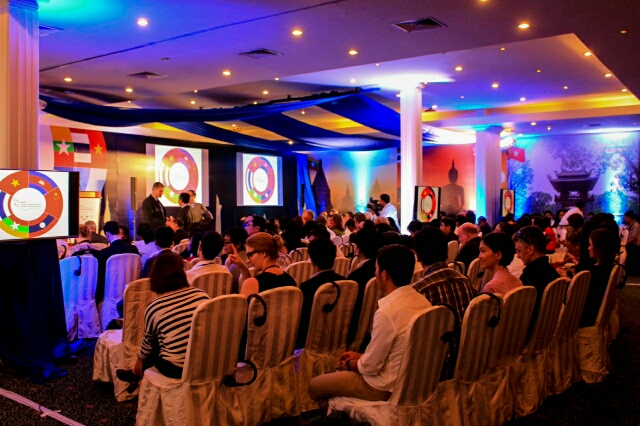
WLE forum 2015 opening ceremony

WLE forum 2015 opening ceremony

WLE forum 2015 opening ceremony

The Greater Mekong Forum on Water, Food and Energy held in Phnom Penh, Cambodia from 21-23 October 2015 was an opportunity for the fellows of the Salween, Mekong and Red River Fellowship programs who attended to share their work, to network, and to learn from others. The Forum itself attracted over 300 participants from institutions of diverse backgrounds and from countries all around the Mekong Region and beyond ranging from civil society organizations and universities, to research institutes and government agencies.

The forum’s main objective was to bring together researchers, practitioners and policy makers to exchange their work and ideas, and to debate key issues related to food, water and energy in the region. To this end, over forty sessions were held over the three days of the event. The Salween fellowship program, together with our sister programs in the Mekong and Red river basins, hosted two sessions during the Forum.

The Fellows introduce their work

The first session was titled “Launching the 2015 Regional WLE Fellowship Program in the Mekong, Salween and Red River Basins.” The session opened with a brief overview of the fellowship program (download the PPT here ). It then provided a space for the other forum participants to learn about the fellowship programs by having the fellows themselves from each river basin individually introduced their research projects, their related work and their aspirations.
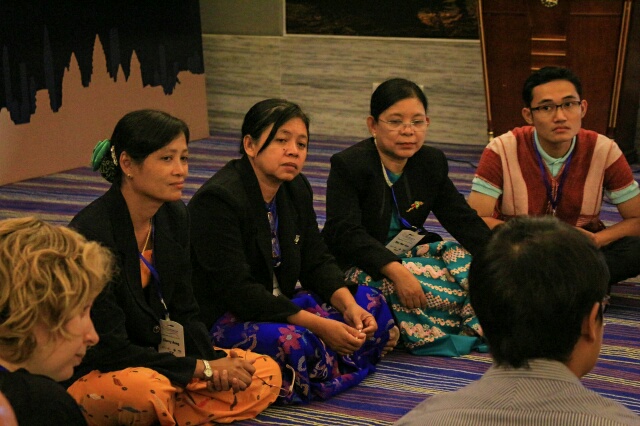
Four Myanmar academics of the Salween fellowship program; Dr. Cherry Aung, Dr. Khin Sandar Aye and Dr. Mar Mar Aye and Saw John Bright

Four Myanmar academics of the Salween fellowship program; Dr. Cherry Aung, Dr. Khin Sandar Aye and Dr. Mar Mar Aye and Saw John Bright

Four Myanmar fellows of the Salween fellowship program; Dr. Cherry Aung, Dr. Khin Sandar Aye; Dr. Mar Mar Aye; and Saw John Bright

A number of participants from the other WLE projects were interested in the fellows’ research, and could see possibilities to collaborate including how the research produced could be shared. This was a positive outcome as it was an aspiration of the wider WLE Mekong Region Program that the individual fellowship projects would integrate with and contribute towards the other WLE projects, and thus deliver a better outcome for the WLE Mekong Program as a whole.
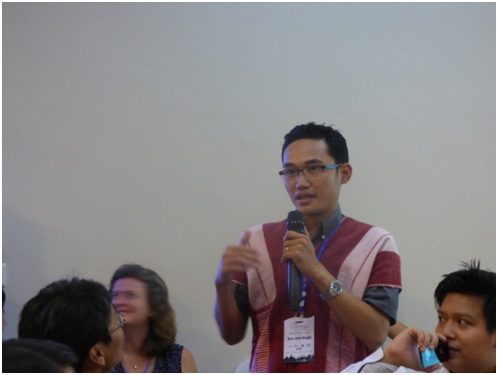
Saw John Bright :Understanding different conflicts,ethnic and marginalized groups In Salween Hydro-Power Project.

Saw John Bright :Understanding different conflicts,ethnic and marginalized groups In Salween Hydro-Power Project.

Saw John Bright: Researching on the value of the Salween River from the perspective of different groups, in particular Karen ethnic groups.

A number of the Salween fellows’ research topics focus around themes related to plans for large dam construction on the Nu-Thanlwin-Salween River and effects on livelihoods, agriculture, gender, and governance. Some topics draw physical science aspects into their analysis of local livelihoods, whilst others use principally social science approaches.

Dr. Mar Mar Aye introducing her research

Dr. Mar Mar Aye introducing her research

Dr. Mar Mar Aye introducing her research

The session provided an open space for fellows to introduce their research to the audience in small groups. For example, one of the Salween fellows, Dr.Mar Mar Aye, a lecturer from the Botany Department of Lashio University, described her study as an ethnobotanical study on the Thanlwin-River local plants. She explained that since ethnic group villages live far from access of modern medicine, they often rely on medicinal plants and these plants are thus valuable to the communities. Yet, so far there hasn’t yet been any documentation of the local values of these medicinal plants, and she hopes that her research could help address this knowledge gap.

Another one of the Salween fellows, Ms. Arun Shining, who is co-founder of the NGO Weaving Bonds Across Borders, explained that she has chosen to collect her data using an innovative research method. She plans to use a video-camera as a way to gather the thoughts of families and children who may be affected by dam construction in Shan State, Myanmar.

Also, Dr.Huang Yaping, a lecturer from the Faculty of Law at Hohai University is focusing her study on to women of the Lisu ethnic group in Yunnan Province, China who have been affected by a dam project. She is looking specifically at their migration patterns, changes in their livelihoods and evaluating the effectiveness of dam impact mitigation programs so as to improve decision-making in the future.

Salween research fellow took turn introducing their projects

Salween research fellow took turn introducing their projects

Salween research fellow took turn introducing their projects

Many forum participants complimented that the session was unlike academic-styled presentations that they have attended in the past. Rather, it was designed in such a way that people from different backgrounds could be on the same page and therefore interact, engage and challenge one another openly and constructively.

Fellows reflect on lessons learned at the forum
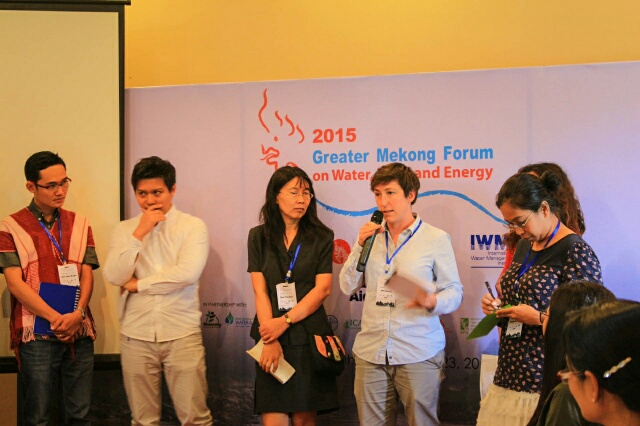
Salween fellow having a debate with Mekong and Red fellows

Salween fellow having a debate with Mekong and Red fellows

Fellows from the Salween, Mekong and Red report back from group discussions reflecting on lessons learned from participating in the forum

On Friday 23rd October, 2015, the Salween, Red and Mekong fellowship programs organized a second session titled “Debating Water Governance in Southeast Asia: The perspective of the 2015 WLE fellow.” This session opened the floor for fellows of the Salween, Mekong and Red River basin to share and reflect on their WLE forum experience.  The session was structured first as paired discussions, followed by a plenary discussion facilitated by Dr. Kanokwan Manorom. The participants then broke in to table groups to focus on emergent themes that they had identified as consistently raised during the WLE forum, namely: water governance; public participation; and working towards interdisciplinary approaches. From my observation, it seemed that incorporating inclusiveness as a concept was a cross cutting theme across all three topics. The session was wrapped up by a reflection back from each table group, followed by a more informal plenary discussion for fellows to discuss their plans moving forward and challenges faced before they start their field data collection for their research.

Fellows help close the WLE Forum during final plenary
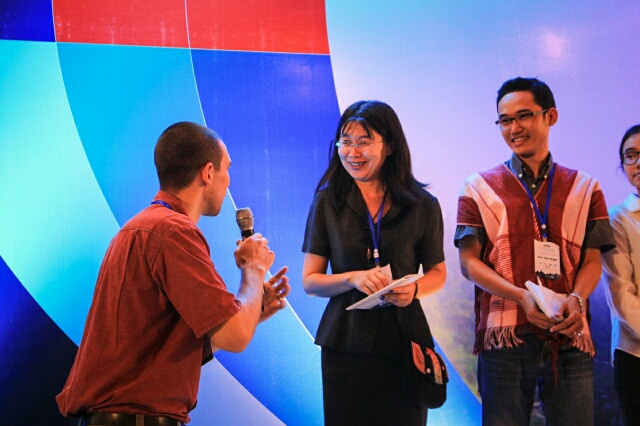
Dr.Bian Yongmin and John Bright give a reflection on WLE forum closing session

Dr.Bian Yongmin and John Bright give a reflection on WLE forum closing session

Dr.Bian Yongmin and John Bright give a reflection on WLE forum closing session

During the closing ceremony of the WLE Forum, representatives from the Salween, Red and Mekong fellowship programs were invited to give their personal reflections and analysis of key themes addressed by the conference. On behalf of the Salween Fellowship, Saw John Bright, Kyaw Thu Han and Dr. Bian Yongmin joined the stage leaving a memorable impression for everyone. They stressed points towards decision-making processes about large water infrastructure projects, in particular hydro-power dams, which they said should be more inclusive to ensure equality and sustainability for all. They also raised the issue of addressing gender equity, recognizing marginalized groups, and the need to address the challenges of trans-boundary governance.

Research fellow reflect back the forum as reporters

Research fellow reflect back the forum as reporters

Research fellow present their reflections to the final plenary of the WLE Forum

Now that the WLE forum is concluded, the Salween Fellows will be busy with their field research as they are well-equipped with their clear research design and ideas for research methodologies and approaches derived from the forum and our previous workshops. Early in 2016, the fellows will also be inviting their mentors to their field sites to benefit from the mentors experience. The next workshop when the fellows meet again will be in Bangkok, when the Center for Social Development Studies, Chulalongkorn University will host a “Write Shop” to help the fellows organize and analyze their data and refine it into a conference paper. This is an important step, as when it comes to the WLE forum in 2016 the fellows will present their research findings and we will produce a conference proceedings that compiles their research papers. In the meantime, the fellows will soon be writing about their field experience in the form of a blog which will be published on the CSDS and Mekong Citizen Website in January 2016.

Logos

Logos

WORKSHOP: The Second Workshop on Data collection and Methodology, Ubon Ratchathani, 4-6 August 2015

The second  Field Study Workshop in Ubon Ratchathani, Rasi Salai,

August 2015

The Second Workshop on Data Collection and Methodology, Ubon Ratchathani and Sri Saket, 4-6 August 2015

             In this second workshop, we focus on the principles and best practices of undertaking fieldwork, and how to document and analyze the findings. This workshop, hosted by the MSSRC, Faculty of Liberal Arts, Ubon Ratchathani University, will entail workshop based discussion and practical experience in the field. Workshop objectives The workshop objectives are for research fellows to: learn about social-science research methods and how to apply them in field work, consider how to incorporate these research methods into their own fieldwork, practice these research methods in the field, and reflect critically on their use, learn how to undertake basic data analysis of qualitative and quantitative field data, continue to build relationships between one another across the river basins.

            The workshop involved field visit to rural villages along the Mun river basin in Sri Saket Province. The fellows had an opportunities to practice their obtained research skills through observations, interviews with the locals, and group work. By the end of the workshop, each group of fellow represented the gained data in the form of PPT presentation based on their assigned topic. The results are as follow;

Group 1 - Role of Women

Group 2 - Role of Government

Group 3 - Role of Civil Society

Group 4 - Traditional Water Management

Group 5 - Local Livelihoods

Field study tools' presentation by Carl Middleton

Experience of past fellow on data collection tools by Dr.Watcharee Srikham

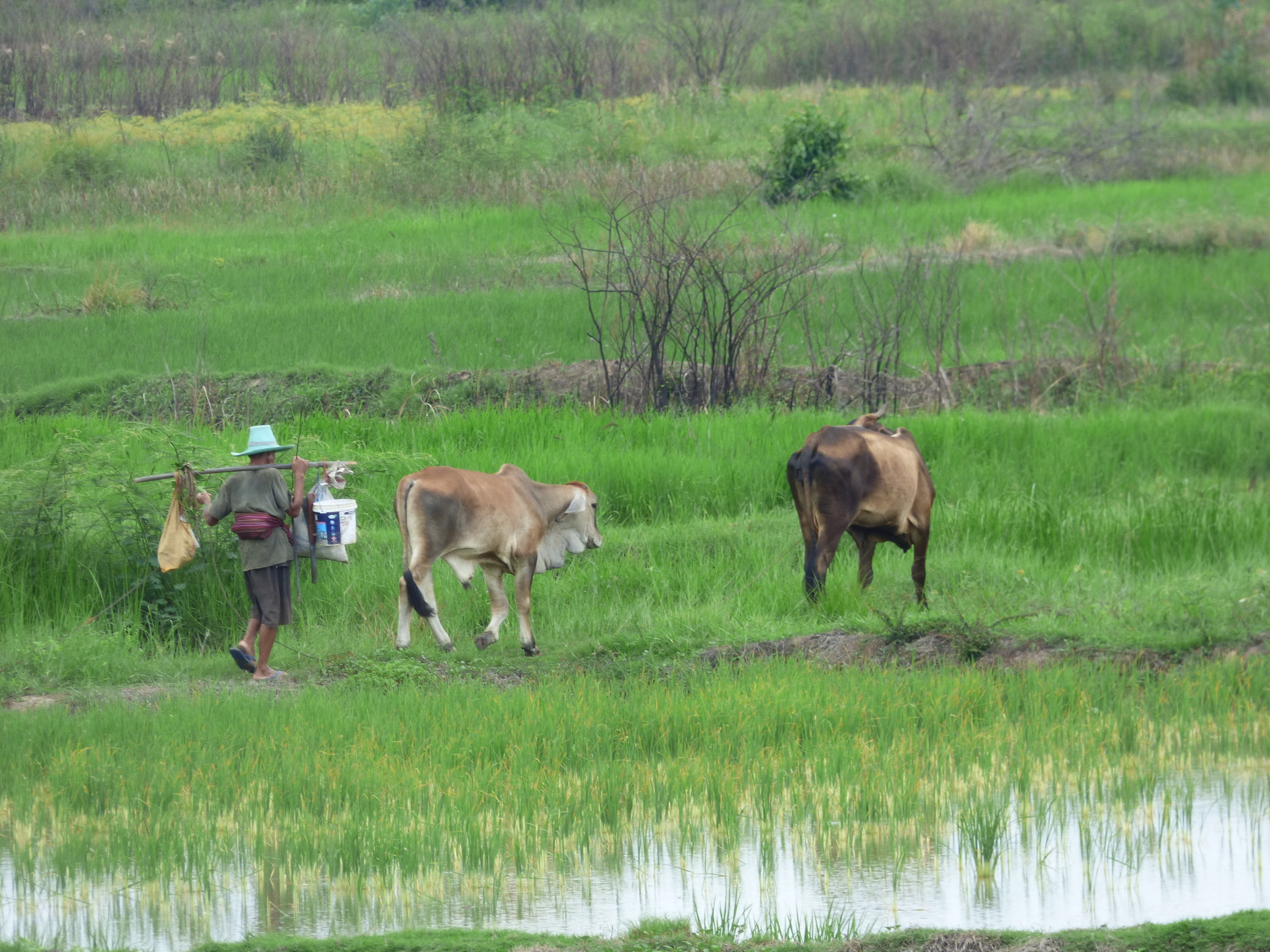
A Glimpse of Rural Wet Land, The Mun River Basin, Sri Saket Province

DSC00160

DSC00160

DSC00176

DSC00176

DSC00011

DSC00011

DSC00103

DSC00103

DSC00191

DSC00191

DSC00178

DSC00178

DSC00065

DSC00065

DSC00184

DSC00184

DSC00152

DSC00152

DSC00154

DSC00154

DSC00114

DSC00114

DSC00080

DSC00080

DSC00048

DSC00048

WORKSHOP: Naga Fellows’ Field Research Training: A Journey to the Rasi Salai Dam, Thailand

By Alayna Ynacay-Nye and Kyle Ojima

On 4 to 6th August 2015, the Naga fellows from the Mekong, Red and Salween river basins traveled to Ubon Ratchathani province in Thailand for an intensive course in field research methods and to study the impacts of the Rasi Salai dam on local livelihoods.  The event was hosted by the Mekong Sub-Region Social Research Center (MSSRC), Ubon Ratchathani University.

Groupphoto2

Groupphoto2

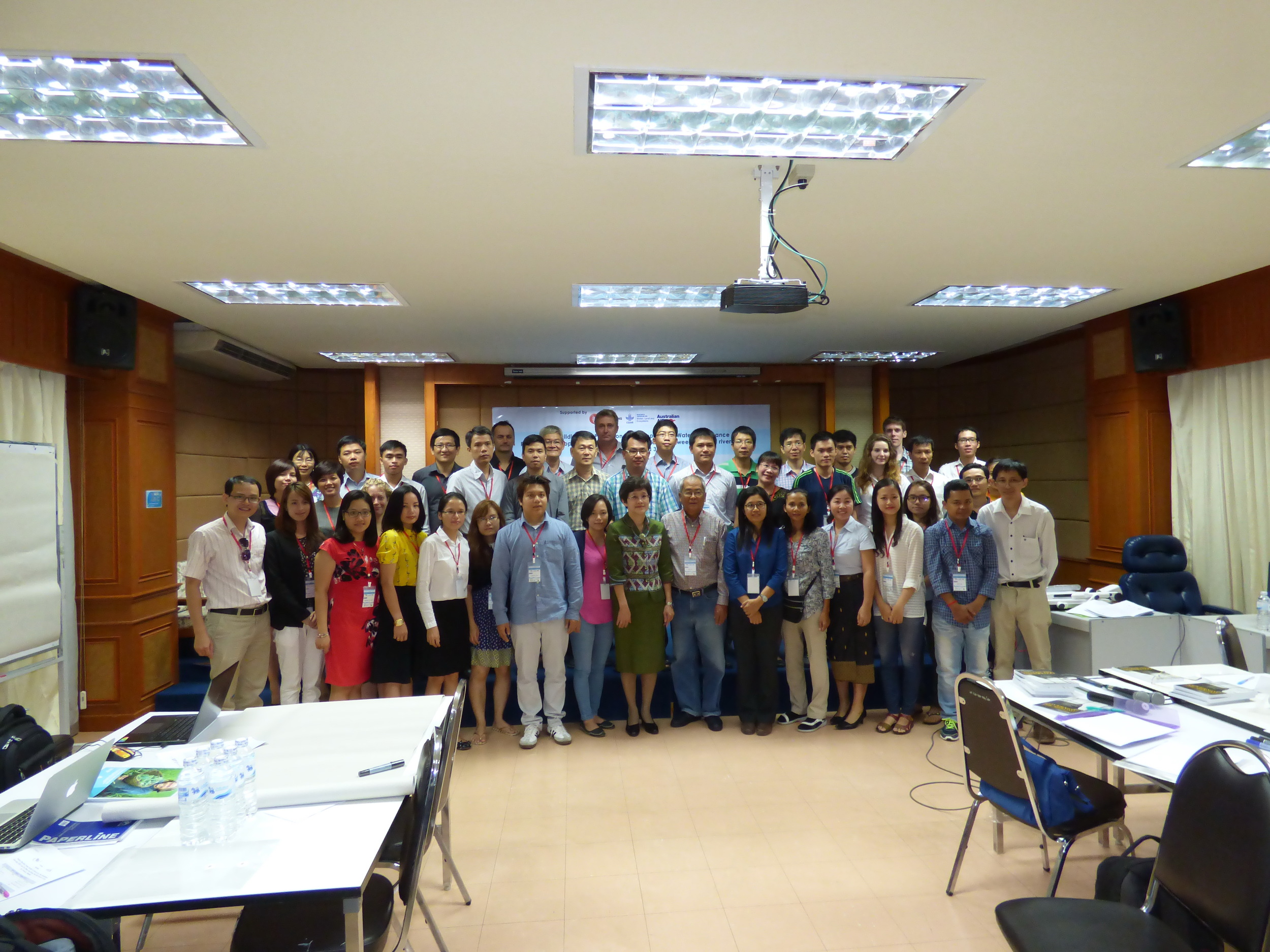
All of the research fellows and staff from the Mekong, Red and Salween river basins who attended the training at UbonRatachathani University. (Photo by Kyle Ojima)

The first day of the training, held at UbonRatchathani University, readied the fellows for their field work, providing an orientation to field research methods. Techniques and approaches were provided by invited speakers, but benefited greatly from the combined experience of the fellows themselves, many of who have experience conducting field research already.  The fellows were then separated into five thematic groups that would be their research focus for the following two days:

  • Roles of women in wetland management

  • Roles of government and local authority in irrigation management

  • Civil society and people organization in wetland recovery

  • Traditional water management

  • Local Livelihoods and change of wetland resources and utilization.

By the early evening, the fellows had relocated from the university to Si Sa Khet province, and were settling into their home stays in villages within the area affected by the dam.

Construction and impact of the Rasi Salai Dam

In the 1990s, the Thai government constructed the Rasi Salai dam on the Mun River in Si Sa Khet Province, inundating a large swathe of wetland, proposed to irrigate the surrounding areas. The impacted wetland was referred to by the locals as their ‘supermarket’ due to the invaluable resources it provided and that supported the community. The dam had a severe impact on many people’s livelihoods, with prolonged flooding and the loss of river and wetland biodiversity reducing fishing yields, wetland rice farm production, and farmers’ ability to raise cattle and to collect valuable products from the wetlands, such as mushrooms, medicinal herbs, red ant eggs, and fire wood.

RasiSalaidam

RasiSalaidam

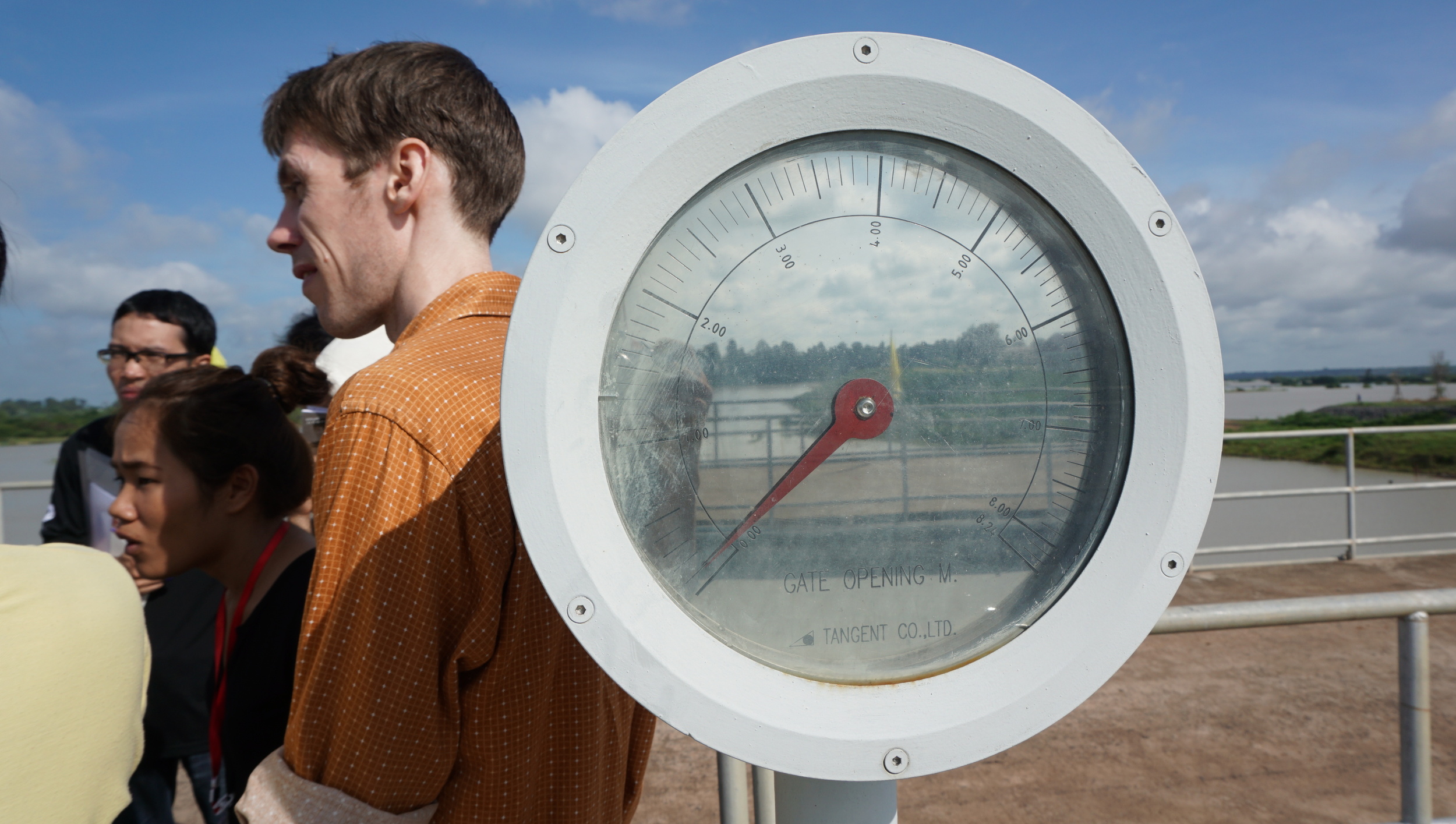
The Rasi Salai Dam in Si Sa Khet province, Thailand, which caused serious impacts to local communities. (Photo by Kyle Ojima)

When the government approved the construction of the Rasi Salai Dam, it did not conduct an Environmental Impact Assessment (EIA) or consult local villagers. When construction began in 1992, villagers were initially told that a 4.5 meter rubber weir was being built to solve the problem of water scarcity. However, after the construction the villagers found that instead of a small rubber weir it was a 9 meter concrete dam. Whilst there have been many impacts, relatively few villagers of the region have actually received the promised irrigation benefits.

Fellows learn about the Rasi Salai Dam

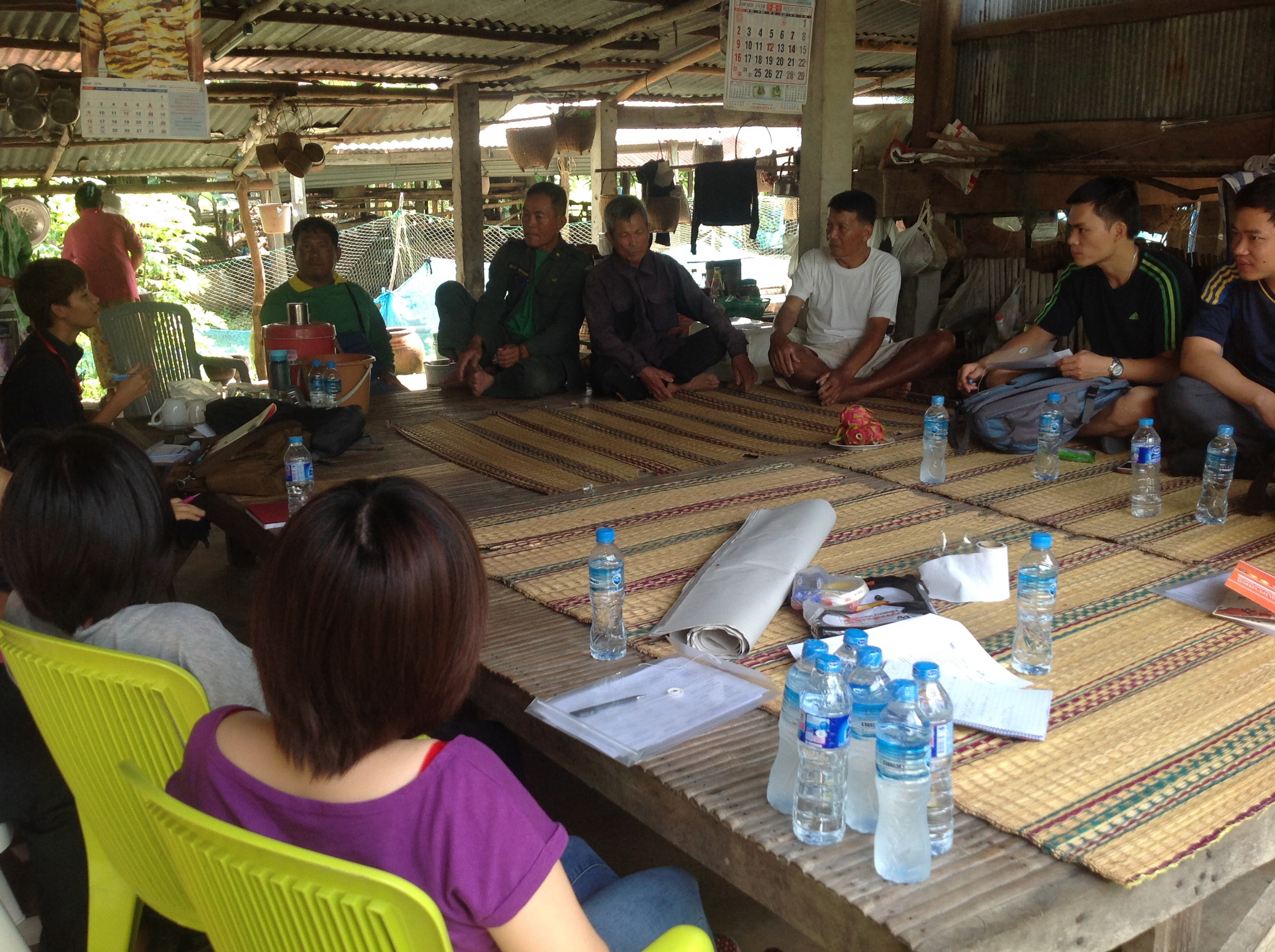
On Wednesday August 5th, the fellows and staff woke up in their local villages, and began to explore their allocated themes. Most of the groups started out with interviews a range of people, from local government organizations to farmers living off the land. The fellows learned that some villagers who once relied on the wetlands for food, were no longer able to grow crops because the flood regime had changed; it had led to water logging creating soils that could no longer sustain rice fields and other plant life. Villagers said that traditionally in the area there were 13 varieties of rice grown for generations, but now there are only 3. The river’s migratory fish species were also in decline.

Meeting 2 Ubon

Meeting 2 Ubon

A meeting with retired local officials and farmers to discuss the effects of the RasiSalai dam on local livelihoods (Photo by Alayna Ynacay-Nye)

Cattlephoto

Cattlephoto

There were once many cattle in the Rasi Salai area, but the loss of grazing land following the dam significantly reduced the number (Photo by Kyle Ojima)

The fellows heard from the villagers interviewed that they are no longer able to depend solely on the land for food and economic security, and must seek alternative solutions. This has resulted in villagers migrating to big cities such as Bangkok in pursuit of low paying labor jobs, leaving their traditional agrarian way of life and weakening their ties to family, culture and their neighbors. For those who chose to stay in RasiSalai, the land is no longer able to provide the variety and quantity of foods it previously could, forcing people to purchase low quality products in the market which further increases their expenses and debt. The creation of the dam sparked social movements advocating for villagers’ rights and compensation. The Royal Irrigation Department (RID) is currently negotiating with the Taam Mun Association, which represents the villagers, for compensation and livelihood recovery programs. This has created a stronger trust and communication between the RID and the villagers that in the past.

Presenting research findings

Finally on Thursday August 4th, the groups left the villages and arrived at the Lower Mun Irrigation Office for a wrap up of the workshop. The fellows were able to present what they had learned in the villages using the research tools studied on the first day of the workshop. A local village leader and a representative from the Royal Irrigation Department also joined the meeting to provide their perspectives on the Rasi Salai Dam and its benefits and impacts.

Overall, the fellows had a valuable opportunity to build relationships amongst each other and therefore across the Mekong, Red and Salween basins. The fellows also learned various techniques for fieldwork and had the chance to actively apply them in the field. In addition, the fellows were able to learn from the local situation at the RasiSalai dam, and to contrast it with the experience in their own countries. The fellows are now looking forward to meeting again and sharing the progress of their research at the “2015 Greater Mekong Forum on Water, Food, and Energy” on 21-23 October in Phnom Penh, Cambodia.

Meeting Ubon

Meeting Ubon

All of the fellows gathered at the Lower Mun Royal Irrigation Department office to present what they learned from their field work.  (Photo by Kyle Ojima)

Further information

Please see the blog titled “Finding Common Ground: Co-produced Wetland Zoning in Northeast Thailand”(12 August 2015) produced for the Recovering and valuing wetland agro-ecological systems and local knowledge for water security and community resilience in the Mekong region(RECOVER) project.

Logos

Logos